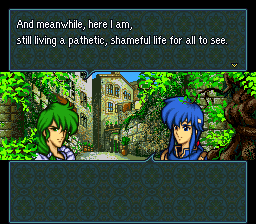
Most Fire Emblem Fans Proabably Haven't Played the Arguably Best Game in the Series (Fire Emblem: Genealogy of the Holy War [SNES/SFC])
Alternate title: The FE4 Dickriding Post
Originally published: April 16, 2026
There is a reason that Genealogy (or FE4) is often touted as one of the best Fire Emblem games. No other game has come close to the grand scale of the story of the Jugdral universe (FE4/5), a story that spans two generations of war heroes with the backdrop of medieval fantasy politics. In terms of gameplay, it was also equally grand, with various new mechanics like skills, marriage and inheritance, and long chapters with wide sprawling maps that encapsulate the progression of time. And as an avid VGM fan, I cannot understate the game's soundtrack, comprising a whopping 3 CDs worth of tracks, which sets the tone for the game. It wouldn't be presumptuous to say that this was the most ambitious Fire Emblem game at the time of its release, and arguably even until today.
Despite being terrible at most strategy games, I've been a Fire Emblem simp fan since I started maining Marth in Super Smash Bros. Brawl. I simped for Marth so hard that I enjoyed the widely unpopular FE11 much more than FE7, probably the most popular FE in the west before Waifu Sim FE13 came to be. Marth-simping aside, I also much preferred the story of FE11 or the Archanea series (i.e. FE1/3/11/12) over the more popular GBA series (FE6/7/8). Even though I was just a dumb kid at the time, I somehow sensed that the Archanea story had more depth and realism despite its simplicity.
Eventually, I discovered that the perceived "dip" in quality of the story-telling in the newer games was probably due to the departure of series creator Shouzou Kaga (加賀 昭三, Kaga Shōzō) from Intelligent Systems (IS) before the GBA games were developed. Kaga had a passion for weaving stories inspired by both mythology and real-world history (see here and here); this translated well into his stories in FE1-5, which despite the space limitations of earlier game systems, showcased great depth in world-building. With each succeeding Fire Emblem iteration, the stories would become more complex, delving deeper into the lore behind the setting as well as the numerous playable characters, culminating in the Jugdral universe, with the most politically driven story to date. Post-Kaga IS would still try to emulate the Kaga flavor of FE stories after his departure; he had already laid the foundation and formula after all. But somehow, they don't hit quite the same, whether it's because they're arguably shallower or a there was a shift to a more generic anime-RPG direction. Certainly, no post-Kaga FE has even come close to the depth of the Jugdral universe's story.
This was a long introduction for an even longer blog post, but FE truly is one of my favorite game series of all time. In hindsight, I'm not exactly sure anymore who this post is targeted towards since a lot of my sperging probably makes more sense to someone with at least some familiarity with the series. There are also some spoilers marked below, but honestly knowing about le epic plot twist doesn't really detract from the experience of playing the game. Read, skim, or just look at the pictures; do what you want.
Looking Back on My Previous Playthroughs
The first time I played FE4 was way back when I was a teen, when the latest English translation (TN) patch available was the Gharnef patch (a minor update of the OG DarkTwilkitri patch, the first playable English patch). I was deep into the FE fandom and had been hearing many interesting things about the game from fans. I remember spending ages reading through guide after guide in Serenes Forest about various unique mechanics before even touching the game since I was expecting Nintendo Hard difficulty (tutorials weren't really a thing yet after all). All that preparation definitely came into fruition, and I was able to beat "one of the hardest FE games despite being dumb as a brick. In hindsight, the game's purported difficulty was overstated; once you read about the essential mechanics (since retro games were actually meant to be played with a guide), you can cheese you way through the game through save scumming and RNG manipulation.
Since that first playthrough, a few more TN patches have come out over the years. I discovered Project Naga, which not only revamped the janky text font and UI, but even came with a new and improved re-translation of all the text (including the game's beautiful epilogue, which was left untranslated previously!). I recall playing this newer patch on my 3DS up until Chapter 4, then ragequitting because I accidentally reloaded the wrong save state which wiped over the RAM. kek.
Fast forward in the recent year, and color me suprised when I discovered another new TN patch, Lil' Nordion, which implemented more UI and bug fixes and painstakingly went through all the names used in the game, revising them as needed based on their possible etymologies as well as coinciding them with official releases of newer FE games. For those unaware, majority of FE names are derived from historical, mythological, or even real-life names. Now I'm an absolute sucker for etymology (hence an etymology section below), so these new names were honestly enough for me to start a new playthrough, but Lil' Nordion also plans to release a future update with another new and improved retranslation. Damn, retro FE fans are eating good in the modern age.
Hence here we are now. What better time to play a fancy new translation for a retro RPG than when you're unemployed? Ha. ha.
Story
The notion of FE4 having the "best story" in the whole franchise is one of the most circlejerked lines in the fandom, and not without justification. Despite still being essentially a JRPG storyline where a band of heroes fight against the Big Bad, there is also much more explored in the finer details. Rather than having a simple conflict of good versus evil, Kaga's approach to storytelling this time is much more nuanced, focusing on history, politics, and gray areas of morality.
"I wanted to try my hand at making a large-scale historical drama, myself. Each character could stay being a character but, more than that, I wanted the history to be the protagonist; I had an urge to make a drama with a large-scale setting, in which you could feel the movements of such history."(Shouzou Kaga, from the Official Guidebook, taken from SerenesForest)
"The 'Emblem' games up till now have featured stories centered on the legends of heroes, but in this game, the history and the world take center stage. In other words, you can think of it as a Taiga drama; we get to view the game's events from a different perspective as opposed to the previous games."(Shouzou Kaga, Fire Emblem Genealogy of the Holy War Fan Special: Roundtable Discussion, translated and hosted by garm)
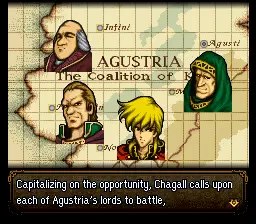
The story of FE4 not only focuses on the main protagonists, but also on the geopolitics concerning the different reigning royal families in the continent of Jugdral. In the very first cutscene, the player is already introduced to the major families of the Kingdom of Grannvale, which is embroiled in an ongoing war campaign with a neighboring country Isaach. With most of their soldiers at war Grannvale has left themselves vulnerable to invasion, which is unfortunately carried out by a supposed ally, Verdane. The protagonist of the story, Sigurd of House Chalphy, immediately sets out with his army to quell the invasion and rescue a noble and close friend who had been abducted. What initially starts as a tiny skirmish turns slowly snowballs into false accusations of treason, conspiracy among political rivals, and ultimately a "holy war" orchestrated by an evil cult.


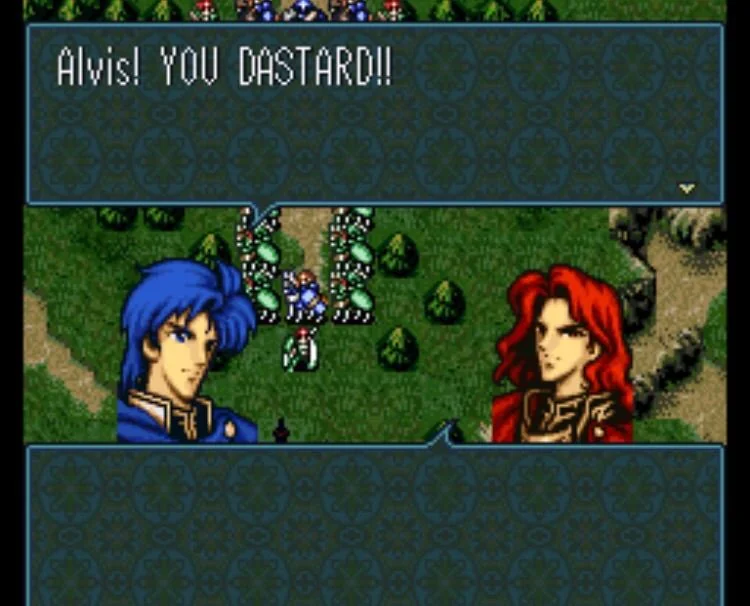
FE4's story is divided into two halves: Part 1 and Part 2. The first half of the story does an exceptional job of setting the tone of the story. FE4 is more cynical than other FEs; though it still has occasional light moments, majority of the story focuses on the harsh realities of war, and how naïveté and ignorance of how politics works can lead to unfortunate outcomes. These themes culminate in the big plot twist at the end of Part 1. Now, anyone who's part of the fandom has likely already heard about it—the "BBQ incident". Sigurd's story climaxes in an epic betrayal by a well-respected noble, and he and his whole army are subsequently decimated by meteors showers. Literally. And this happens right after it is revealed to Sigurd that his wife has been kidnapped and brainwashed to marry the man who betrayed him (the actual circumstances are much more complicated than simple NTR of course, but it was still a final "Fuck you” to Sigurd before he burned to death). It's an absolute tragic end to our heroes, who the player has been painstakingly leveling up to this point; but it lays the ground for Part 2 of the story—the second generation.
Part 2 follows Seliph, Sigurd's son, as he forms a rebellion against an oppressive regime, and ultimately thwarts the evil cult and becomes the rightful heir to the throne of Grannvale. Aiding him in the army are the children of his father's comrades who had also perished or barely survived at the end of Part 1. At this point of the game, the story becomes more hopeful, as the newer second generation carry on their parents' legacies, clearing their names and bringing peace and justice back to the war-torn continent. The story ends with a satisfying conclusion, and as an added bonus, players who manage to get an overall A ranking get to unlock an extra scene—the cherry on top.

Since this post isn't really meant for hardcore FE fans who are already familiar with FE4, I won't bother attempting a formal analysis on stuff like themes, motifs, and symbols. Frankly, my current writing ability is not enough to do this game justice, but I'd like to think that I would be able to take the challenge some day.
Characters
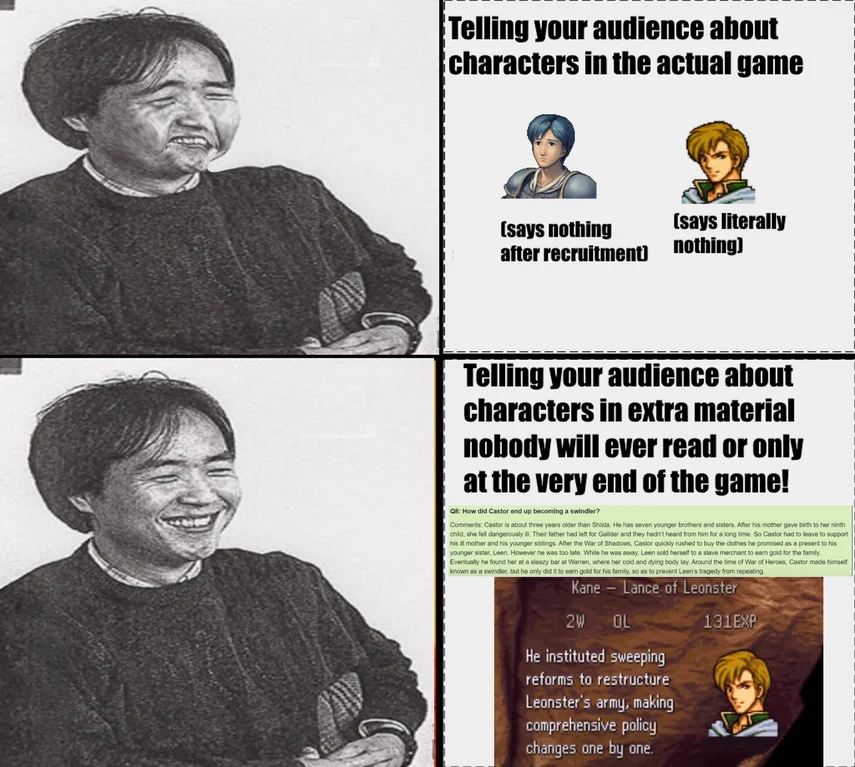
For the uninitiated, the Fire Emblem series is also known for having a wide cast of characters. It becomes a challenge then for the devs to somehow make each character memorable in both design and writing, more so with the limited space available in retro console hardware. I would say that Kaga was moderately successful in achieving this in FE4. While previous FE games mainly focused on the leading characters, FE4 had more unlockable conversations among supporting characters. Though it was a major improvement in this regard, most players can still notice that not all characters were written equally well. Some supporting characters were clearly not prioritized in the writing department (one of them, Arden, was intended to be a simple joke character!). Personally, I feel like first-gen characters like Chulainn, Jamke, and Claude could have benefited from some more screentime or writing tweaks. The problem is worse with the second-gen characters, as majority of the dialogue was much more generic, with little personality outside of referencing their parentage.
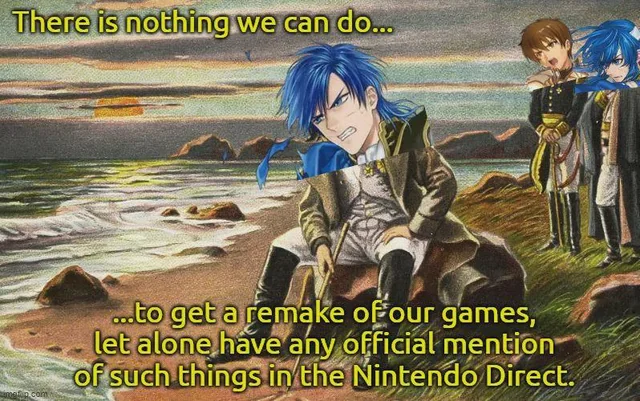
To be fair to Kaga however, various sources (see here and here) have shown that he had further fleshed out various character backstories and world-building tidbits that he was unable implement in the game, likely due to time or hardware limitations. Some of these ideas have also been developed in different novel and manga adaptations. And it should be noted that in 1996, the level of detail was already a feat for its time. Even today, FE fans are high on copium waiting for Nintendo to announce a remake for FE4, hoping modern consoles can allow the story to become even more fleshed out aside from adding quality of life fixes to the gameplay.
Gameplay
The core gameplay of FE4 is quite different from the main series formula, though it did lay the groundwork a lot of future mechanics. Some gameplay aspects however are totally unique to this game, and haven't really been replicated since (Note: I haven't played FE16 and above, nor do I care to at the moment). I won't elaborate on every single gameplay mechanic, but just some of the ones that really stick out.
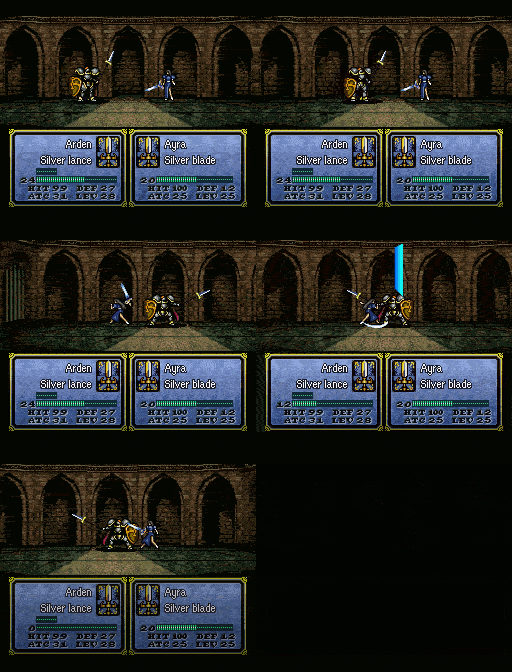
A common criticism of FE4 (and other Kaga Emblems) is the lack of balance. Due a variety of factors (some of which are further elaborated below), some characters, weapons, items are either inherently broken or absolute garbage. For example, Sigurd can easily solo most of Part 1 with his stats alone, and all the more with overpowered weapons and stat buff items. In contrast, Arden, has low mobility, poor stats, minimally useful skills; hence is usually benched in most regular playthroughs. That isn't to say that the game still isn't enjoyable to many, but rather a reminder that the game can still come across as "retro" and "unpolished", belonging to a franchise that that hadn't found its core identity yet. Nevertheless, many fans including myself find a certain charm to these odd gameplay quirks ("it's not a bug, it's a feature").
Large Sprawling Maps
FE4 maps generally comprise a 64x64 tile area (the prologue chapter being the only exception), which is around 4-8x larger than other maps in the series. Hence each chapter typically takes hours to complete, equivalent to multiple chapters in a regular game. As a result, mounted units with their superior MOV plus Canto tend to dominate in this game, with infantry units struggling behind. Hence, FE4 is commonly dubbed by fans as "Horse Emblem".
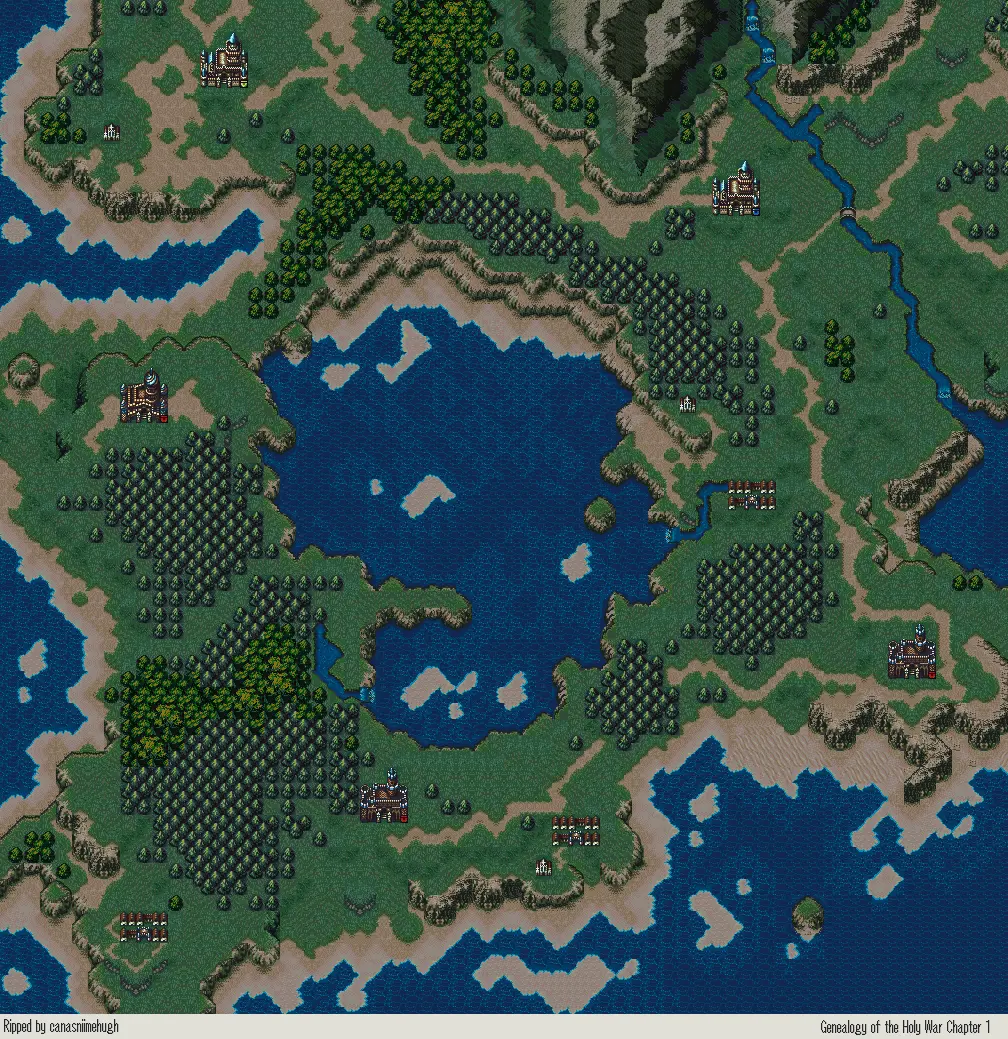
Another consequence of the large maps is that a lot of time per chapter can be spent on merely traveling from location A to B to C, which can be a slogfest. This problem is exacerbated when the chapter is designed to force the player backtrack their from location C to B in order to reach location D. Though not exactly ideal for map design, it does prompt the player to explore alternate strategies like splitting armies or usage of Return/Warp/Rescue staves.
On the other hand, from a narrative perspective, these giant maps complement the large scale of the story. Players including myself praise how the large maps are effective in immersing the player in the world, evoking a feeling of being part of a country at war, traveling to strategic locations and conquering castles. In fact, stitching the all the chapter maps together will roughly form bigger map of the whole continent, further cementing how every action is interconnected, like a complex web of causation. In interviews, Kaga make it clear that this was intentional, and integral to the game's development.
"We've made the maps that large because the world itself was broadened. The previous map size made it feel like it was a limited-scale war, and even if there were events here and there it didn't make you feel like it was a large world. Through the system we used this time around, many of those large regions can exist at the same time, and influential individuals of each region can move independently… I thought it'd be able to express such dramatic developments. We also made it a long story going across two generations – parents and children – with that in mind. Feeling the movements of a large-scale story while letting the player shape the future depending on their playstyle were points we tried to implement."(Shouzou Kaga, from the Official Guidebook, taken from SerenesForest)
Interestingly, Kaga also shared that FE4 was supposed to be a standalone game separate from Fire Emblem, which explains why a lot of new ideas were injected. It seems that he also admits that by focusing on the "large scale" aspects of the game, fine-tuning some of the "smaller" details (*cough* balance *cough*) may have fallen off the wayside.
"The focus of this game is its large world and employing tactics on a large scale, that's why I didn't pay as much attention to detail in the smaller, individual parts. However, this is just for this game, and if I were to create continuations of previous entries, I would go back to the style I had used for them. Trying to portray the feeling of a large world, while paying attention to and adding little details on a smaller scale… it's hard to do both at the same time, since you'll end up compromising on your main focus if you work too much on the other."(Shouzou Kaga, Fire Emblem Genealogy of the Holy War Fan Special: Roundtable Discussion, translated and hosted by garm)
Skill System and Quirks
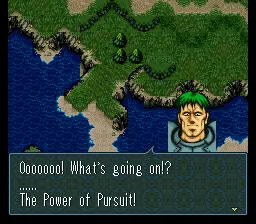
FE4 was first to introduce a formal skill system in the series. Skills function as special abilities unique to certain units that add a bit of flair to battles. In many cases PROC-ing certain skills can make or break a battle outcome. Some skills are so essential for a decent run (e.g. Pursuit/Follow-up), that units who don't possess this skill are usually benched for poor performance. Second generation characters also generally inherit the skills of their parents (among other things); with the right combination of certain skills, characters can be absolutely broken. The skill system, when used to its full potential, can make the difficulty a cakewalk. On the flipside, masochists players who seek a challenge can choose to use weaker units with suboptimal skills.
Money and Item Management
Most RPGs, including the Fire Emblem series, have a single unified money pool for all characters to buy items, repair weapons, and the like. FE4 is odd one out in that it instead has separate treasury funds capping at 50,000 for each character. Generally, characters gain money by visiting villages in the map or winning matches in the arena. Notably, units cannot give money to other units unless said unit is: (1) giving to a lover, (2) giving to a sibling, (3) a thief. Giving money also uses up a turn in-game, and units cannot choose the amount to give so they end up giving everything they have or until a cap of 50,000 in the receiver's end.
Another quirk is that units cannot trade items, in contrast to all other FE games. Instead, a workaround must be done to simulate a trade: a unit must stell their item/weapon at the castle pawnshop at half-price, after which a second unit can purchase the same item at full price, resulting in a net loss of 50% of the item's value. This becomes problematic when trying to transfer useful stat-buff items like rings, which cost 20-40k, to a weaker unit. Weak units tend to perform poorly in arenas, hence will have trouble gaining money without external support (e.g. receiving money, bargain skill).
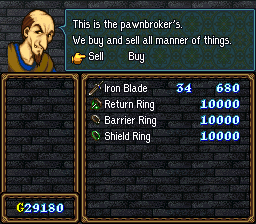
Many players find this new money and "trading" mechanic needlessly complicated and inconvenient. Others however appreciate how it adds an additional layer of strategy to the game. Personally, I've gotten used to the mechanic, as once you're familiar with the "rules", it's easy to work with. I did find myself in decision paralysis at times in the process of trying to optimize money and inventory; however the game is still playable without fussing over these things too much. Kaga himself explained that there were several considerations while implementing this mechanic (see here and here). First, it was to encourage players to use all available units rather than focusing their resources on a few. Second, to add more depth to the love system, since married characters will gain the ability to give each other money. Third, for narrative and thematic purposes:
"The theme behind this mechanic is human relationships; I wanted to portray the significance of inheritance, as well as how family members and lovers help one another. The inconvenience of this mechanic was precisely because I wanted players to share the joy of the characters when they receive something. However, taking into consideration the relationships between close friends we see throughout, I think it would've been better if we could incorporate a mechanic for 'close friends' as well."(Shouzou Kaga, Fire Emblem Genealogy of the Holy War Fan Special: Roundtable Discussion, translated and hosted by garm)
Love and Inheritance
Ah, the main course. The eugenics love system is the most iconic gameplay mechanic of FE4. In this game, units of the opposite sex can fall in love with each other and marry once they reach 500 love points. Players can orchestrate their favorite pairings through certain actions, or simply leave it to chance. Perhaps my favorite part about the love system is how it provides unique conversation events between characters that expand on their personalities and backstories (aside from granting gameplay bonsuses like increased love, new weapons, or stat boosts).
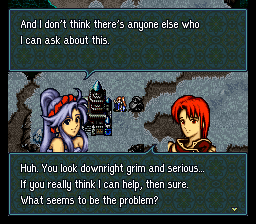
Though similar and perhaps a precursor to the support system of modern FEs, the love system is more complex and has greater impact on gameplay, as it interplays with another major mechanic, inheritance. First generation characters who marry and don't die before a certain point in the game will eventually bear offspring, who become playable characters in the second generation. These children will inherit items, stats, stat growth rates, skills, weapon levels, gold, and holy blood from each parent. With the number playable characters and possible pairings, this introduces another layer of strategy that provides a lot of replayability. This emphasis on inheritance as a mechanic is also cohesive with the themes of the story (and even has an impact on the game's epilogue), providing another good example of gameplay and story integration.
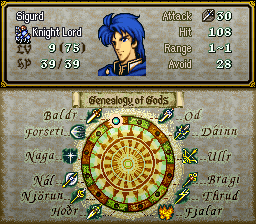
The legacy of the love system carries on in some capacity in certain modern FEs, although they function as optional post-game content rather than fully integrated game mechanics. To the dismay of longtime fans, the support system of newer games has also developed a more waifu-pandering approach, with increased emphasis on being able to marry your favorite characters through your character self-insert (As a side note, I've seem modern FEs, termed "Waifu Emblem", be compared to the Persona series, another popular waifu-pandering JRPG with a notorious fanbase). Suffice to say, the only way we'll see the return of the FE4-style of love and inheritance is if Nintendo and IS actually decide on releasing a remake of the game (copium).
Music
I am no music scholar, so musicians out there might cringe at my attempt at analyzing the soundtrack with my inadequate understanding of music theory. However, I can easily listen to the complete soundtrack in its entirety on loop, so it deserves a special mention in this post.
Yuka Tsujiyoko (辻横 由佳, Tsujiyoko Yuka) served as the composer and sound director for FE4, as well as all previously released FEs at the time. Without discrediting her previous work (which were also impressive in their own right), FE4's soundtrack definitely stands out among the rest. Compared to the previous games, there is a distinct tonal shift in the music that complements well with the dark and emotional tones of the story. As discussed earlier, Kaga intended to write a story with a different approach; accordingly, this requires a different approach to the score.
"When I read the story, I felt I couldn't create a song that simply portrayed the enemy as an extremely evil character. (Although there are such characters.) While they are adversaries, from the enemy's perspective, you realize that they are enemies after all. Their justifications vary: reclaiming their territory, ambition for expansion, fighting for the poor, or being used as a cover for someone else. Expressing these nuances musically was a challenge."(Yuka Tsujiyoko, Comments in the CD Booklet of FIRE EMBLEM GENEALOGY OF HOLY-WAR ORIGINAL SOUND VERSION, translated with DeepL and edited by me)
Regarding on whether she was able to capture these "nuances", I think Tsujiyoko was quite successful. For instance, in track 1-19 "For Whose Sake" (誰がために), you can feel the sense of inner conflict felt by the protagonist as he has no choice but to annex a neighboring kindom for a greater cause, knowing that his enemies are also justified in fighting against him to protect their land. In track 1-11 "Doorway to Destiny" (運命の扉), there is a feeling of uneasiness and frustration as the protagonist desperately tries to clear his family's name of wrongdoing, not knowing of the tragedy that awaits him. Even minor tracks with throwaway names are impactful like 3-06 Lover 1 (恋人1), a warm and easy-going waltz that seems to hide unresolved feelings (ironically, the track does NOT play in lover coversations but instead in specific conversations between family members; nevertheless the music is still very appropriate to the context it occurrs in).
Track 1-19 For Whose Sake (誰がために)
Track 1-11 Doorway to Destiny (運命の扉)
Track 3-06 Lover 1 (恋人1)
Aside from hitting emotional cues, FE4's soundtrack plays a vital role in world-building as it showcases the cultural inspirations of the different regions in Jugdral. Each region has its own collection of theme songs (e.g. enemy army theme, castle town theme, map theme, palace theme), each of which cohesively form a musical identity. For example, the themes of the Thracia region sound rough and aggressive, using harsh instrumentation and a fast tempo, befitting a country known for its harsh climate and cutthroat mercenary population. In contrast, the themes of the Munster region sound like medieval European aristocracy, with pleasant string melodies and pizzicatos. In creating the world, Kaga drew inspiration from real nations both current and past (he explains more here), and Tsujiyoko skillfully followed suit with her compositions.
Track 2-09 Thracian Army (トラキア軍)
Track 2-08 Munster Army (マンスター軍)
Graphics and Art
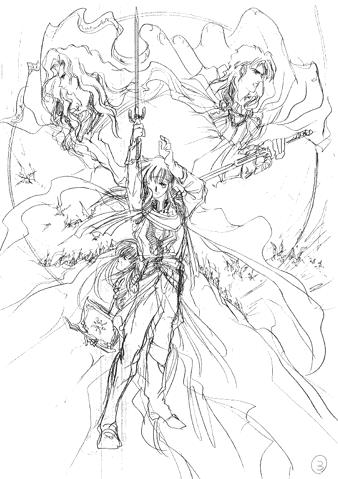
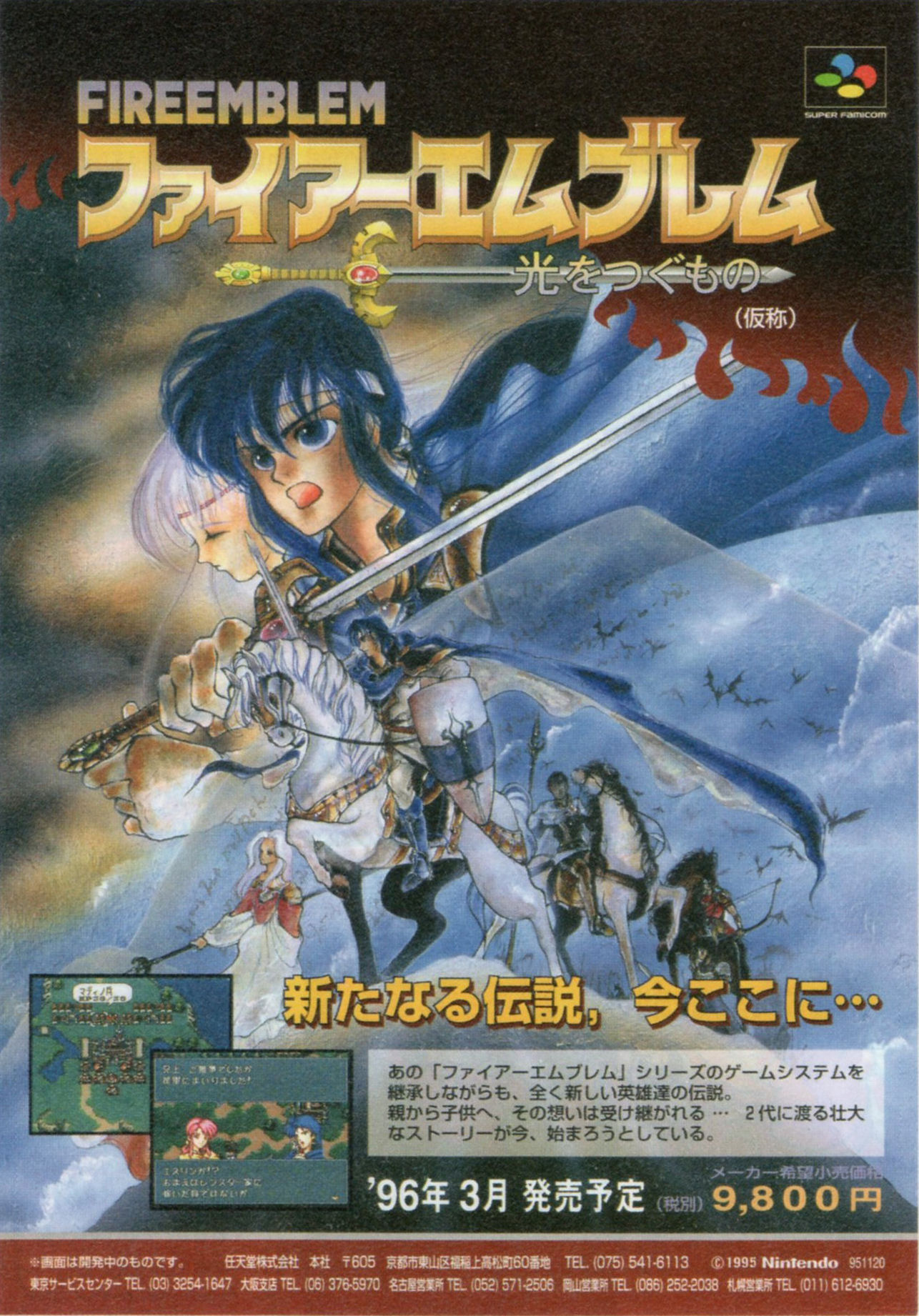
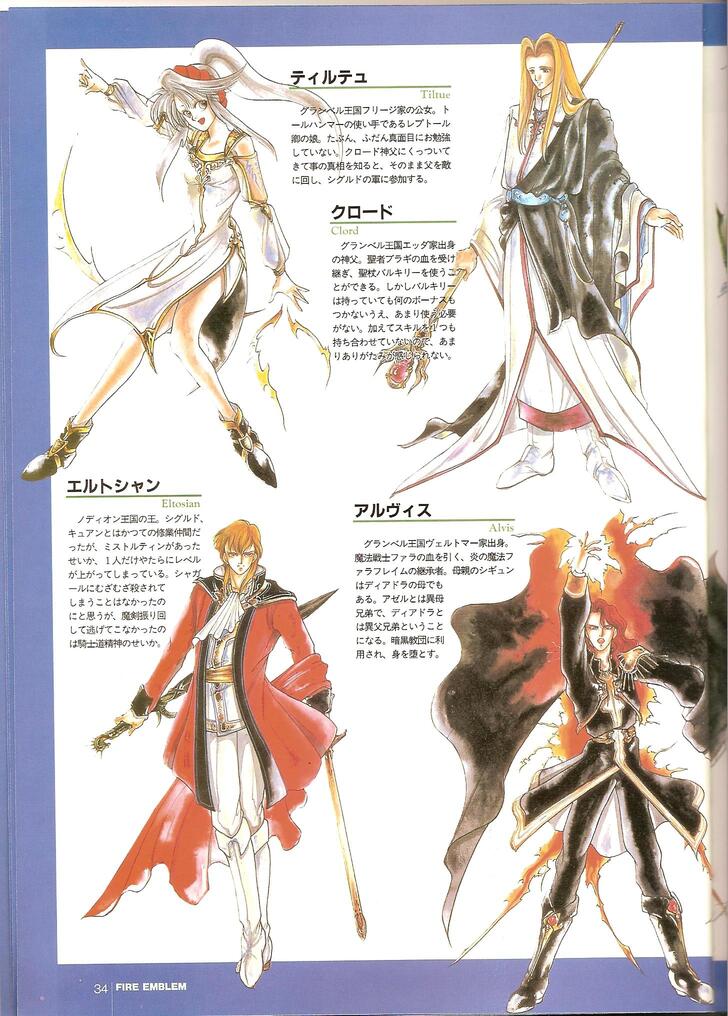
Again, I'm no artist so I don't know how to critique art beyond "I think this looks pretty good/prety ass". Art is subjective anyway, so anyone can just take a look at the artwork below and make their own opinion.
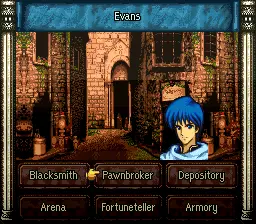
Graphics-wise, FE4 is a major step up from the previous game, which was also released in the same system. The spritework is much more detailed, animations are more extravagant, and the maps and backgrounds have more depth. Notably the overworld map battle animations are more surprisingly more detailed than a lot of modern FEs, as they provide unique animations depending on which weapon or tome is used. The anime portraits of each character are a step up too, although it's a shame that a lot of unique named enemy characters end up reusing the same portraits with slight recolors. Perhaps it couldn't be helped, with space limitations and quite a large cast of characters.
Character and class concept art, which formed the basis for the spritework in-game, was done by Katsuyoshi Koya (小屋勝義 Koya Katsuyoshi). Koya probably most well-known among fans as the illustrator for the Fire Emblem Trading Card Game, which features characters from FE3-5. These aforementioned TCG illustrations were reused in FE13 for bonus DLC units, hence most newer fans are more familiar with these compared to other offical artworks.
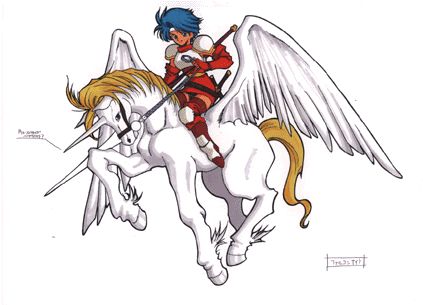
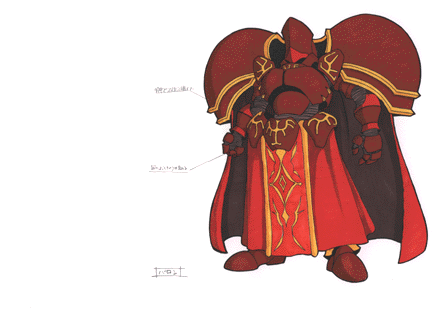
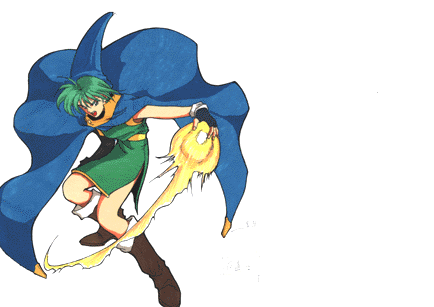
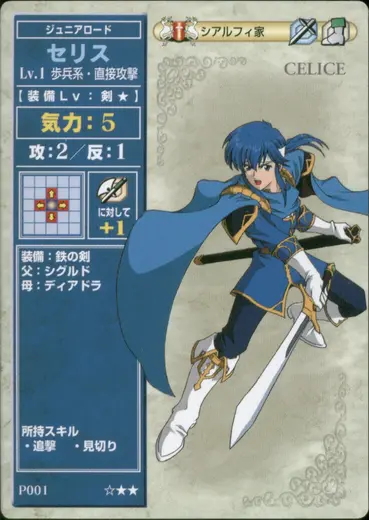
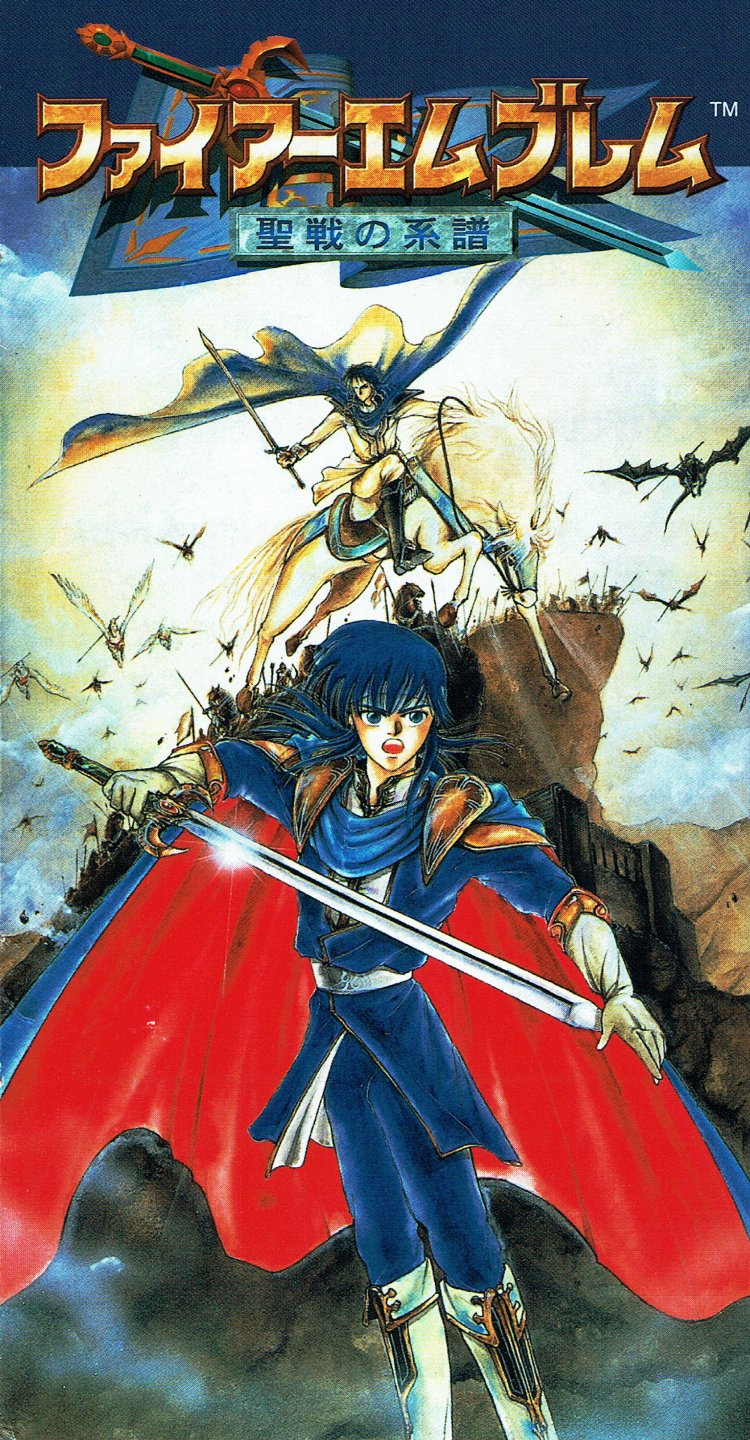
As for the official boxart and character art in the game manual (and other official media at the time), the style is quite different. It definitely comes across as dated, reminiscent of shoujo or even yaoi artstyles of the 80s-90s that come with odd body proportions. To be fair, the game literally came out in 1996, so it's not really out of the ordinary. I personally appreciate it for what it is, and I'm sure many anime fans nostalgic of those days also do. The official game box art and packaging concept illustrations were illustrated by Naoko Kugo (九後 奈緒子, Kugo Naoko, disclaimer: I am not 100% sure if this is the correct kanji spelling for her name, but it's all I could find on the English-speaking web). Although there seems to be no official documentation of who the artist is for the official character art, the art style appears quite similar to Kugo's, so it's probably not a stretch to assume that she might be the artist. There isn't a lot of information about her online, but other works credited to her include some shoujo manga and illustrations for various novels.
Closing Notes
This post took me much longer than expected to make... Initially I planned to add another section for more, uh, miscellaneous information of less importance (personal ships, fan translation notes and history, etymology notes), but I figured I could save it all for another post so I can finish this damn thing already.
As a noob writer, coder, and everything else, this was probably my most ambitious "project" so far. What was originally just supposed to be a personal game review turned into some faux-encyclopedic article. Or something. I don't really know how to describe this thing, but it was a labor of love. This might be my last post as a NEET, hence I really wanted to finish something before I inadvertently let this site rot. It was fun while it lasted I guess.