Cultural Disconnect - Chinese Graves and Negative Social Credit
Originally published: March 11, 2026
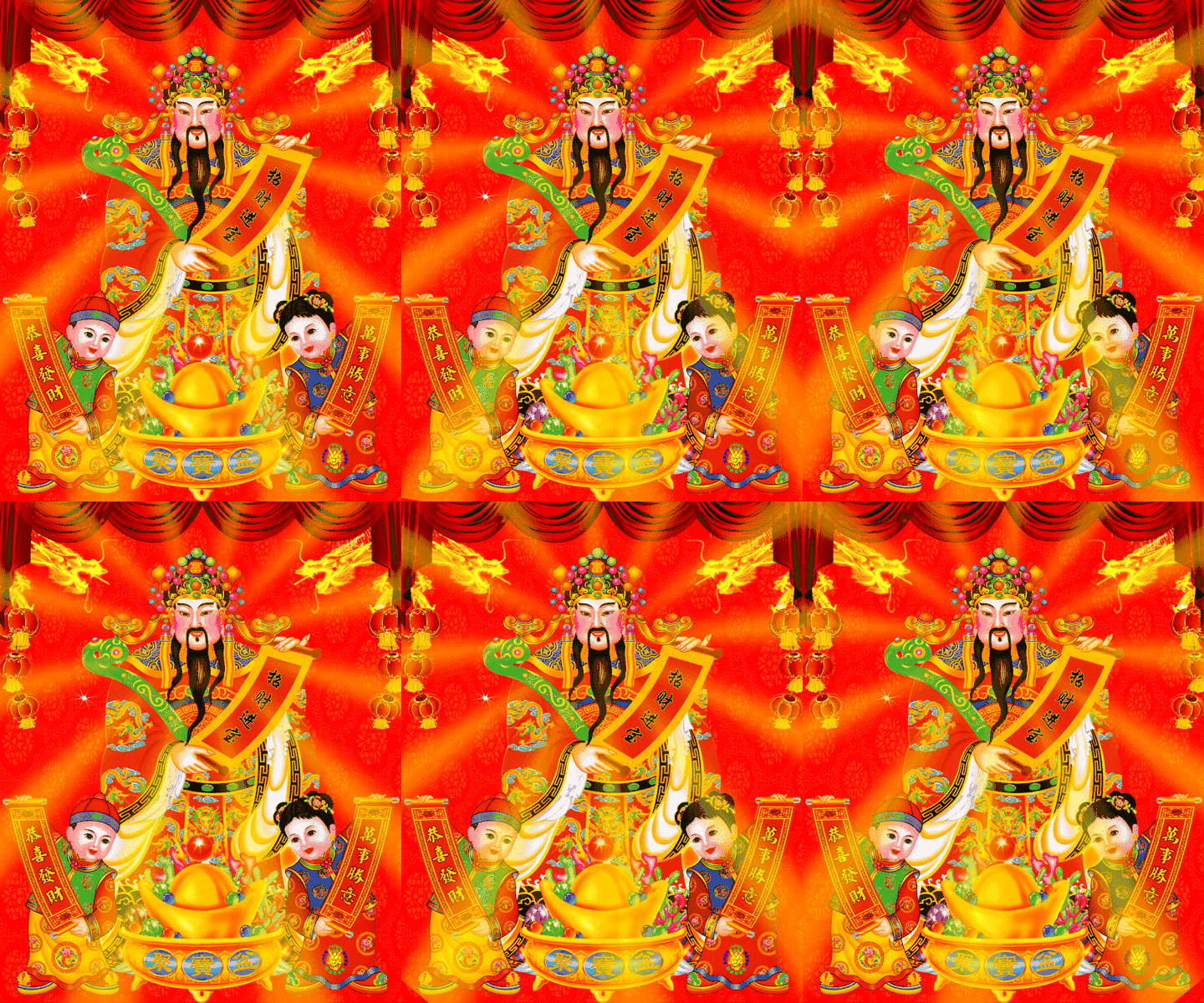
I was editing my to-do list in the projects page, and got distracted after writing down the "Chinese Shitposting" idea. I have a few gifs saved in my folder, but the idea I had in mind was something akin to those social credit memes and brainrot Chinese good fortune reels that have that old Buddha-looking guy (later discovered that he was probably 財神 (Cáishén), a god of wealth in Chinese folk religion and Taoism).
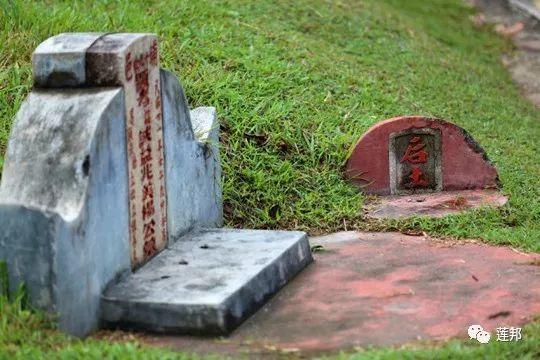
I was then reminded of 后土 (Hòutǔ), another mythological figure, whose name is often seen engraved in a separate tombstone in Chinese tombs. Every time I'd visit our family plot, I'd notice the 后土 grave marker in the right side of the entrance, but growing up I never knew its significance and it was oftentimes ignored (guess we're cursed now). My direct family had no clue either; cultural preservation was not a priority in our family it seems. It was only in one of those random days where I thought to Google it online where I discovered why it was there (information online about it in English was still quite sparse, I recall).

In summary, 后土 is a goddess and guardian of the earth. By choosing burying the dead, we are essentially disturbing the earth, hence it is essential to pay respects. 后土 can also be translated as "[boundary of the] land behind the grave", hence also functions as some sort of boundary marker to seperate different plots (Morgan, 1996). Perhaps this boundary marker is important to prevent some esoteric bad juju from "mixing" of plots.
As I was trying to dig for more information, I eventually stumbled upon a blog post about traditional Chinese graves, which then led me to reading about Kwong Wai Siew Peck San Theng, a more than a century-old Chinese cemetery in Singapore founded by multiple clan associations of the Hakka and Cantonese immigrant populations. However, the land was eventually acquired by the Singaporean government and converted to a residential town due to increasing land scarcity. Century-old graves were exhumed and bodies were cremated and eventually were moved to a columbarium built in the same town.
It's disheartening to learn that such a significant cultural relic is permanently gone, especially when you take into account that many cemeteries in China were destroyed by the Cultural Revolution. Few Chinese cemeteries outside China still remain, and the ones are where I'm from are poorly preserved. Language and culture of other ethnic groups and subgroups in China and other countries in the Sinosphere are also slowly dying out. I myself am a prime example of this; I can barely have any knowledge of cultural traditions and what should have been my mother tongue. And the irony of it all is that my clearly Chinese face often leads to people mistaking me as a foreigner despite spending all my life here. It's a strange feeling of guilt that I have, though the logical side of me knows that the odds were already against me. As much as I'd love to learn about my heritage, resources are scarce and it seems that at this point most of the threads connecting to my ancestors have been cut. So now the most I can do is just go through internet rabbit holes and make China-themed shitposts.

Further Reading
- Hellman, N. (2025, May 4). Houtu: The earth god of a graveyard plot - RTI. Radio Taiwan International. Link
- MORGAN, C. (1996). TRACES OF HOUTU’S (后土) CULT IN HONG KONG. Journal of the Hong Kong Branch of the Royal Asiatic Society, 36, 223–230. Link
- Teo, E. (2022, October 12). The traditional Chinese grave. ET Speaks From Home. Link
- Yilun. (2020, October 13). Architecture of the dead. SgArchi. Link